Why Britain doesn't produce a Palmer Luckey
Every government says it backs founders. Palmer Luckey needed four things to get from a garage to an Ohio weapons factory, and Britain falls short on all four.
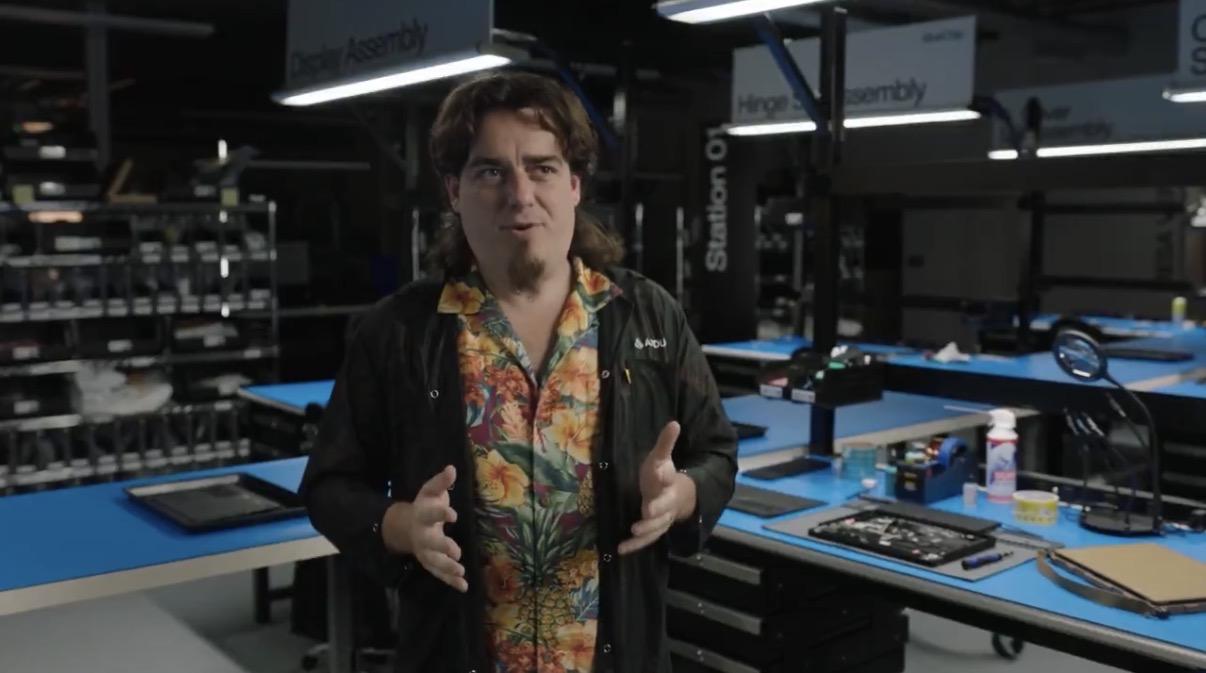
Palmer Luckey founded Oculus at 19 to run a Kickstarter for a virtual reality headset he had built in his parents' garage.
Two years later, at 21, he sold it to Facebook for $2 billion.
In 2017 he started again. Anduril, his defence company, now builds autonomous combat jets at a factory in Ohio and has beaten Boeing, Lockheed Martin and Northrop Grumman to an Air Force contract.
Every British government I can remember has said it wants people like him. Two weeks ago Andy Burnham and John Healey told business leaders they would run the "most pro-business country" in the world. Last week Healey said he wanted to help the founders who keep going "through sheer bloody-mindedness".
On Wednesday he delivered his first Budget.
I have built and sold a company in Britain. I don't think a British Luckey would get from the garage to the factory, and the reasons are in the framework every government has kept in place, whatever it says about founders.
TL;DR
- Luckey needed four things: to keep most of his first exit, a state willing to buy from a young company, a place where making things paid, and a government that competed to host his factory. Britain falls short on all four.
- Founder tax relief has gone from £10 million to £1 million, and Wednesday's Budget halves it again to £500,000. The new Founders' Relief comes with turnover, staff and growth tests the Treasury expects about 600 people a year to pass.
- The American equivalent lets a founder take up to $15 million of gains tax free, with no turnover, staff or growth test.
- The US Air Force picked a seven-year-old company over the three biggest defence firms in America. Britain is still working out how to define a UK supplier.
- Our industrial electricity was the most expensive of any IEA country in 2023, employer National Insurance starts at £5,000 with no ceiling, and none of the six ministers running the economy has founded a company.
What made Luckey possible
It is tempting to put Luckey down to genius and luck. He has plenty of both. But four other things had to be true, and each of them was a policy choice.
- He kept most of the money from Oculus, and could put it to work again.
- His government was willing to buy weapons from a company with no track record.
- Making physical things in America was cheap enough to be worth doing.
- A state competed to host his factory, and it went from site to production in 14 months.
Here is how each of those looks for a British founder.
Keeping the first exit
A founder's second company is often bigger than the first, because they start it with money, contacts and the lessons of the first. Luckey started Anduril three years after the Oculus sale.
Britain used to understand this. Entrepreneurs' Relief was simple: hold 5 per cent of your company, and pay 10 per cent capital gains tax on the first £10 million when you sell. I used it when I sold Company Check. It was the clearest reason to build in Britain rather than Delaware.
It was renamed Business Asset Disposal Relief and cut to £1 million. On Wednesday Healey halved it again to £500,000 from April 2027. At 18 per cent on half a million, the saving is about £30,000 on a company that took a decade to build. Gains above it are taxed at 24 per cent.
Alongside it comes a new Founders' Relief: 10 per cent on up to £10 million, shared with any BADR you have already used. That sounds like the old deal back, until you read the conditions. You need:
- 25 per cent of the shares when trading began
- five tax years of holding, and five years of UK tax residence
- £10 million of turnover and 15 full-time staff in the year before you sell
- two of these three: 25 per cent compound turnover growth over three consecutive years, the same growth in staff numbers, or £1.5 million of R&D spend with tax relief claimed in the last three years.
The Treasury's own estimate is that around 600 people a year will qualify.
Compare America. Under the qualified small business stock rules, a founder who holds shares for five years can take up to $15 million of gains, or ten times what they put in if that is more, with no federal tax at all. Holding for three or four years gets half or three quarters of that. The company has to have less than $75 million of assets when the shares are issued. There is no turnover test, no headcount test and no growth hurdle.
Oculus sold after two years, so neither scheme would have covered it. The difference is what a founder can plan around. An American founder at the kitchen table knows the rules on day one. A British one has to guess whether they will clear a growth hurdle a decade out, under a relief that has been cut three times.
The Founders' Relief consultation runs to 30 November, so there is still time to make the conditions predictable.
A state that buys from new companies
Anduril was founded in 2017. In April 2024 the US Air Force picked it and General Atomics over Boeing, Lockheed Martin and Northrop Grumman to build its first autonomous combat aircraft. This June it awarded the production contracts, four months ahead of schedule.
That contract is why there is a factory in Ohio. A company building physical things needs a large customer willing to take a chance on it, because that is what pays for the plant.
Britain has started to move. Healey, as Defence Secretary, launched UK Defence Innovation in July 2025 with a ring-fenced budget of at least £400 million a year, and the Strategic Defence Review set a target to spend 10 per cent of the equipment budget on new technology.
On Wednesday the government committed to 3 per cent of GDP on defence by 2030. The one measure that would decide who gets that money, a commitment to buy British, exists only as a Budget promise to develop "a new definition of UK supplier".
The test is whether a seven-year-old British company could win a production contract for a combat aircraft against BAE Systems. I can't name one that has.
Making things here costs too much
Luckey's factory is the part of the story I find most useful. Anduril's production chief describes a plant with no big fixed machines and few robots, staffed by people trained to move between products. Ninety four per cent of the Fury's parts are commercially available.
A British founder trying the same thing pays for it at every step.
Energy. In 2023 the UK had the highest industrial electricity prices of the 24 countries reporting to the International Energy Agency: 46 per cent above the median, almost 50 per cent above France and Germany, and roughly four times the United States. Full Fact says we were still the highest in 2024. Gas prices do not explain it, because UK industrial gas was 7 per cent below the IEA median. The gap is carbon pricing, levies and network charges added on top.
Employing people. Employer National Insurance is 15 per cent on every pound above £5,000, with no ceiling, on top of a minimum wage of £12.71 an hour and a 3 per cent pension. In Ohio the employer's share is roughly 8 to 9 per cent all in, and most of it stops once a salary passes a cap. Make UK asked for the NICs threshold to rise to £7,500. It did not happen.
Business rates. Rates are charged on the building and on some of the plant inside it, such as power supply and heating, so part of any investment in a site raises the bill.
Suppliers. Manufacturing has fallen from 30 per cent of GDP in 1970 to about 8.5 per cent, the steepest fall in the G7. The Chemical Industries Association says chemicals output is down 60 per cent since 2021, with at least 25 sites closed. Off-the-shelf parts only help if someone nearby still makes them. A British founder imports more of them, and pays freight and tariffs to compete with the country that made them.
Wednesday's Budget moved on some of this. The British Industrial Competitiveness Scheme will take 25 per cent off electricity bills for around 10,000 firms from April, and the first-year capital allowance rises from 40 to 50 per cent. But Make UK said the Budget "failed to address any of the fundamental costs holding back investment and growth in manufacturing", and the CBI said it offered little concrete relief for most businesses.
A government that competes for the factory
In January 2025 Anduril chose a site in Pickaway County, about 20 miles from Columbus, for Arsenal-1: 5 million square feet, nearly $1 billion of the company's own money and 4,000 jobs promised. Ohio approved a 30-year job creation tax credit worth about $450 million, and JobsOhio added a $310 million grant, the largest in the state's history.
By March 2026 it was building jets. That is fourteen months from choosing a site to production.
I have not found a British planning route that would let a founder plan on that timetable for a plant of that size.
Who is writing the rules
When ministers say they back founders, it is worth asking how many of them have been one.
| Role | Name | Time in the private sector | What it was | In politics since |
|---|---|---|---|---|
| Prime Minister | Andy Burnham | About 3 years | Trade magazines after Cambridge, 1991 to 1994 | 1994 |
| Chancellor | John Healey | About 3 years | Deputy editor of a parliamentary magazine, then a PR firm; otherwise charities and the TUC | 1992 |
| Business Secretary | Jonathan Reynolds | 10 months | Trainee solicitor at Addleshaw Goddard, left before qualifying | 2010 |
| Chief Secretary to the Treasury | Emma Reynolds | About 5 years | A public affairs consultancy, then lobbying for TheCityUK between seats | 2005 |
| Energy Secretary | Miatta Fahnbulleh | None | Cabinet Office, Ed Miliband's office, IPPR, New Economics Foundation | 2008 |
| Work and Pensions Secretary | Pat McFadden | None | Researcher and adviser to Dewar, Smith and Blair from 1988 | 1988 |
Careers as described in public profiles and press reports; rounded.
Six people, about a dozen years in the private sector between them, against about 160 years in politics, think tanks and unions. None of them has founded a company, made payroll on a Friday with the money not yet in, or sold one and decided what to do with the proceeds.
When Burnham was asked on television in 2015 about his private-sector experience, he cited a few years in trade publishing and the fact that his wife had run a business.
I don't think you need to have run a company to set tax policy. But I think it explains why every government praises founders and then designs a relief that 600 people a year can use. The people writing the rules have never had to plan around them.
Where I could be wrong
- Britain does produce successful founders: Arm, DeepMind, Revolut and Wise all started here. The question is whether they stay and build the second company here, and I have not measured that.
- America's lead in defence comes partly from spending about ten times what we do. A British Anduril might fail for want of a big enough customer, whatever the tax rules.
- If France and Germany, with cheaper industrial power, are also losing chemicals plants, energy is not the whole story.
- Make UK and the CBI are lobby groups, so their verdict on the Budget is a position as much as a measurement.
The challenge
To Westminster: if you want a British Luckey, give founders a relief they can plan around on day one, buy from young companies, take the levies off industrial electricity, and raise the employer NICs threshold.
To British founders, including me: Luckey did not wait for the Pentagon to fix itself. He built the thing and the contracts followed. Some of us need to do the same here, with the numbers in public, so the next Chancellor has to answer to a company that exists.
If you are a UK founder who has run these numbers and reached a different answer, I want to hear from you.
Sources: Wikipedia on Palmer Luckey · City AM on Healey and founders, 22 October 2026 · City AM, "most pro-business country", 15 October 2026 · Founders' Relief policy paper · Kutak Rock on the 2025 QSBS changes · Military Times on the CCA production contracts · The Register on Arsenal-1 · Air & Space Forces Magazine, March 2026 · The Manufacturer on the Budget, 28 October 2026 · Bloomberg on business reaction
Enjoyed this? Get Hurricane Signal
Field notes on building real things with LLMs. Occasional, practical, no hype.
